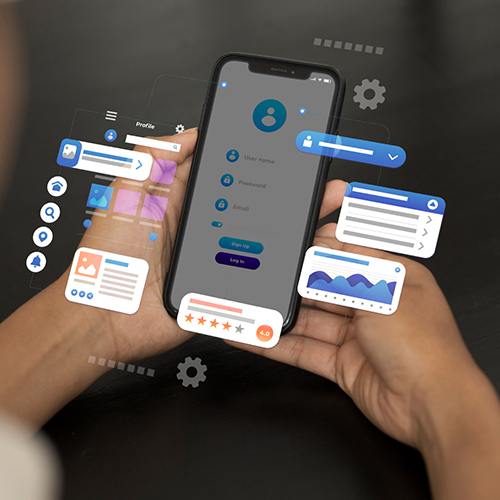
How Apps and Websites Work: Software Development Explained for Students

Computer Science: Building the Digital World Around Us
Have you ever wondered how mobile apps and websites are created?
Every time you use apps like WhatsApp, online shopping platforms, or digital payment systems, there is a team of professionals who have designed and developed them. This field teaches students how to create such applications.
For example, when you order food online, the app shows restaurants, calculates delivery time, and processes payment—all of this is built using programming and software development skills. Students learn how to create similar systems from scratch.
What actually happens inside a computer when we use it daily?
When you open a file, play a video, or use an app, the computer performs many operations in the background. This field helps students understand how computers process instructions and how software communicates with hardware.
For instance, when you click a button on a website, it sends a request to a server and shows results in seconds. Learning this process helps students build faster and more efficient systems.
What kind of skills will a student develop here?
Students develop problem-solving and logical thinking skills. They learn programming languages and how to break big problems into smaller steps.
For example, creating a simple calculator app requires understanding user input, processing data, and displaying results. Gradually, students move on to complex projects like developing full mobile apps or websites.
How does this field connect with our everyday life?
Today, almost every activity we do is connected to software in some way, even if we do not notice it. From morning to night, we depend on digital systems. When you unlock your phone, check messages, watch videos, or make online payments, software is working in the background to make everything smooth and fast.
For example, when you book a train ticket online, the system does many things within seconds—it checks how many seats are available, calculates the fare based on distance and category, verifies your details, processes payment, and sends confirmation. Earlier, this used to take a lot of time at railway counters, but now it happens instantly because of well-designed software systems.
Similarly, in banking, when you transfer money using UPI, the system verifies your account, checks balance, ensures security through OTP, and completes the transaction in seconds. In hospitals, patient records, test reports, and billing are all managed digitally, which helps doctors provide faster treatment.
Even in agriculture, farmers use mobile apps to check weather forecasts, market prices, and crop suggestions. In education, students attend online classes, submit assignments, and access study materials through digital platforms.
All these examples show that this field is not limited to computers—it is deeply connected to real life. It helps make everyday tasks faster, easier, and more efficient.
What kind of career opportunities can students explore in the future?
This field offers a wide range of career opportunities because every industry today depends on software. Students are not limited to one type of job—they can choose roles based on their interest and skills.
For example, a student can become a software developer, who designs and builds applications like mobile apps, websites, or business software. If someone is interested in design and user experience, they can work on creating attractive and user-friendly interfaces. Those interested in problem-solving can work as system engineers or backend developers, handling complex operations behind the scenes.
There are also opportunities in testing (ensuring software works correctly), cybersecurity (protecting systems from hacking), and emerging areas like cloud computing and artificial intelligence.
One of the biggest advantages is flexibility. Students can:
Work in well-known IT companies
Join startups and work on innovative ideas
Start their own business or develop their own product
Work as freelancers and earn independently
For example, many students today create simple mobile apps, games, or websites and upload them on platforms like the Play Store. Some earn money through ads or subscriptions. Others build websites for local businesses like shops, schools, or small industries and earn income.
This field not only provides jobs but also gives opportunities to become an entrepreneur.
Can students from small towns or villages succeed and grow in this field?
Yes, definitely. In fact, today this field has become one of the most accessible career options for students from any background. Location is no longer a barrier to learning.
With just a smartphone or a basic computer and internet connection, students can start learning programming and other skills. Platforms like YouTube, free coding websites, and online courses provide high-quality education at little or no cost. Students can learn at their own pace, practice regularly, and build their skills step by step.
There are many real-life examples where students from villages started learning with limited resources. Some began by watching free tutorials, practicing on shared computers, or using mobile apps. Over time, they developed strong skills and now work in reputed companies or earn through freelancing.
Even remote work has become common. A person sitting in a small village can work for a company in a big city or even another country. For example, a student can design a website for a client in another state or develop software for an international company—all from home.
This shows that success in this field depends more on skills, dedication, and continuous learning, not on location.
Why is this field considered a strong and future-proof career option?
The world is becoming more digital every day. Almost every service—education, healthcare, banking, shopping, transportation—is moving online. As a result, the demand for software and skilled professionals is continuously increasing.
For example, during recent years, online classes, digital payments, and remote work became very common. This increased the need for platforms, apps, and systems that can handle millions of users. Companies require skilled people to build, maintain, and improve these systems.
Even small businesses are going digital. Local shops are creating online stores, schools are using digital platforms, and farmers are using mobile apps. This means the demand is not limited to big companies—it exists everywhere.
Another important point is that technology keeps evolving. New areas like Artificial Intelligence, Data Science, Cybersecurity, and Cloud Computing are growing rapidly. Students who enter this field can continuously upgrade their skills and stay relevant.
Because of these reasons, this field offers:
- Long-term job stability
- High demand across industries
- Opportunities in India and abroad
- Continuous growth and learning
What makes this field a good choice for students personally and professionally?
This field is not just about getting a job—it is about gaining the ability to create and innovate. Instead of only using technology, students learn how to build it.
For example, a student can create a simple app to solve a local problem, like helping people find nearby services, managing small business records, or providing educational content. This gives a sense of achievement and confidence.
It also develops important life skills such as logical thinking, problem-solving, creativity, and patience. These skills are useful not only in careers but also in everyday decision-making.
Professionally, it offers good salary potential, career growth, and global opportunities. Personally, it gives independence—students can work from anywhere, start something of their own, or explore different areas based on interest.
Most importantly, this field allows students to be creators of the future, not just users of technology. Those who learn and adapt will have the power to shape new ideas, build solutions, and contribute to society in meaningful ways.
Author: Prof. Dr. Sharvari C Tamane,
Director, IICT, MGM University
Email Id: [email protected]
Website: iict.mgmu.ac.in