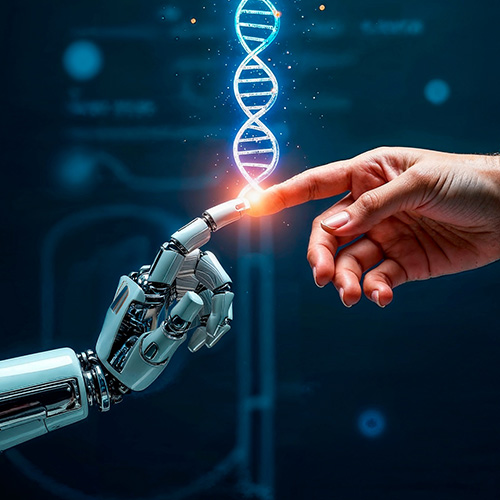
Unleashing the Future: Why Biotechnology and Protease Enzymes are Shaping 2026
Introduction
Imagine a world where plastic-eating enzymes clean our oceans, "smart" drugs target only diseased cells without side effects, and detergents work perfectly in ice-cold water. This isn't science fiction it is the reality of Biotechnology. At the heart of this revolution lies a powerhouse known as the Protease Enzyme.
Often called the "biological scissors," proteases are enzymes that break down proteins into smaller peptides or amino acids. From digesting the food in your stomach to being the critical ingredient in life-saving viral treatments, proteases are the workhorses of the bio-industrial age.
What is Biotechnology?
Biotechnology is the fusion of biology and technology. It involves using living organisms, cells, or biological systems to develop products and technologies that improve our lives and the health of our planet.
The Role of Enzymes like Protease
In biotechnology, enzymes act as biological catalysts. Proteases, specifically, are indispensable because they can be engineered to perform highly specific tasks, such as:
- Industrial Processing: Removing hair from leather or "stonewashing" jeans.
- Pharmaceuticals: Acting as "inhibitors" to stop viruses like HIV or COVID-19 from replicating.
- Waste Management: Breaking down organic waste in eco-friendly ways.
Present Status: India and Global (2025–2026)
The biotechnology landscape has shifted from "theoretical research" to "industrial execution."
The Global Snapshot
- Market Size: The global biotech market is valued at approximately $1.77 trillion in 2025 and is projected to soar to over $6.3 trillion by 2035.
- Key Drivers: AI-driven drug discovery and "Green Biotech" (sustainability) are the primary engines of growth.
The Indian Scenario
- BioEconomy Boom: India’s bioeconomy has crossed the $165 billion mark and is on track to reach $300 billion by 2030.
- Global Hub: India currently provides 65% of the WHO’s vaccine requirements and holds 20% of the global biosimilar pipeline.
- Startup Ecosystem: With over 10,000 biotech startups, India is becoming a global destination for low-cost, high-quality R&D.
Why Choose Biotechnology in 2025 and Beyond?
- AI Integration: 2026 is the year of "Digital Biology." We are now using AI to predict how enzymes like proteases will behave before ever entering a wet lab, making research faster and more exciting.
- Sustainability Focus: As the world moves away from petrochemicals, biotech offers "green" alternatives for everything from fuel to plastic.
- Recession-Resistant: Healthcare and food security are universal needs, making biotech one of the most stable career paths globally.
Career Outcomes
A degree in Biotechnology no longer limits you to a laboratory bench. The career paths are diverse:
| Role | Industry | What You Do |
|---|---|---|
| Bioprocess Engineer | Manufacturing | Scaling up the production of enzymes or vaccines. |
| Bioinformatics Specialist | IT/Research | Using coding and AI to analyze genetic data. |
| Regulatory Affairs | Pharma/Govt | Ensuring new biotech products meet safety standards. |
| Quality Control (QC) Analyst | Industrial | Testing enzyme purity and effectiveness. |
| Biotech Entrepreneur | Startups | Launching companies to solve environmental or health issues. |
Who Should Choose This Field?
Biotechnology is for you if:
- You are a Problem Solver: You want to tackle global challenges like climate change or incurable diseases.
- You Love Interdisciplinary Work: You enjoy the intersection of biology, chemistry, and computer science.
- You Are Detail-Oriented: Precision is key when you are working with microscopic organisms and genetic codes.
FAQs
Q: Can I get a job in biotech after a B.Sc. or B.Tech?
A: Yes! Entry-level roles like Lab Technician, QC Analyst, or Production Associate are widely available. However, specialized roles in R&D often require a Master’s or Ph.D.
Q: What is the average starting salary in India?
A: For freshers, salaries typically range from ₹3 to ₹6 LPA, depending on the role and company. Specialized roles in Bioinformatics or Data Science can start much higher, around ₹8 to ₹12 LPA.
Q: Is AI a threat to biotech jobs?
A: On the contrary, AI is a tool. The demand for "Hybrid Professionals" those who understand both biology and AI/Data Science is skyrocketing in 2026.
Conclusion
As we navigate 2026, Biotechnology stands as the bridge between a resource-depleted past and a sustainable, healthy future. Whether it’s through the precision of a protease enzyme in a life-saving drug or the scale of a national vaccine program, this field offers more than just a job—it offers a chance to rewrite the code of life itself.
Author: Dr. Ashok A. Shinde
Associate Professor
Institute of Biosciences & Technology
MGM University
Chhatrapati Sambhajinagar,
Maharashtra, India.