Nature’s Engines: How Biotechnology Is Revolutionizing Enzyme Production for a Greener World
Introduction
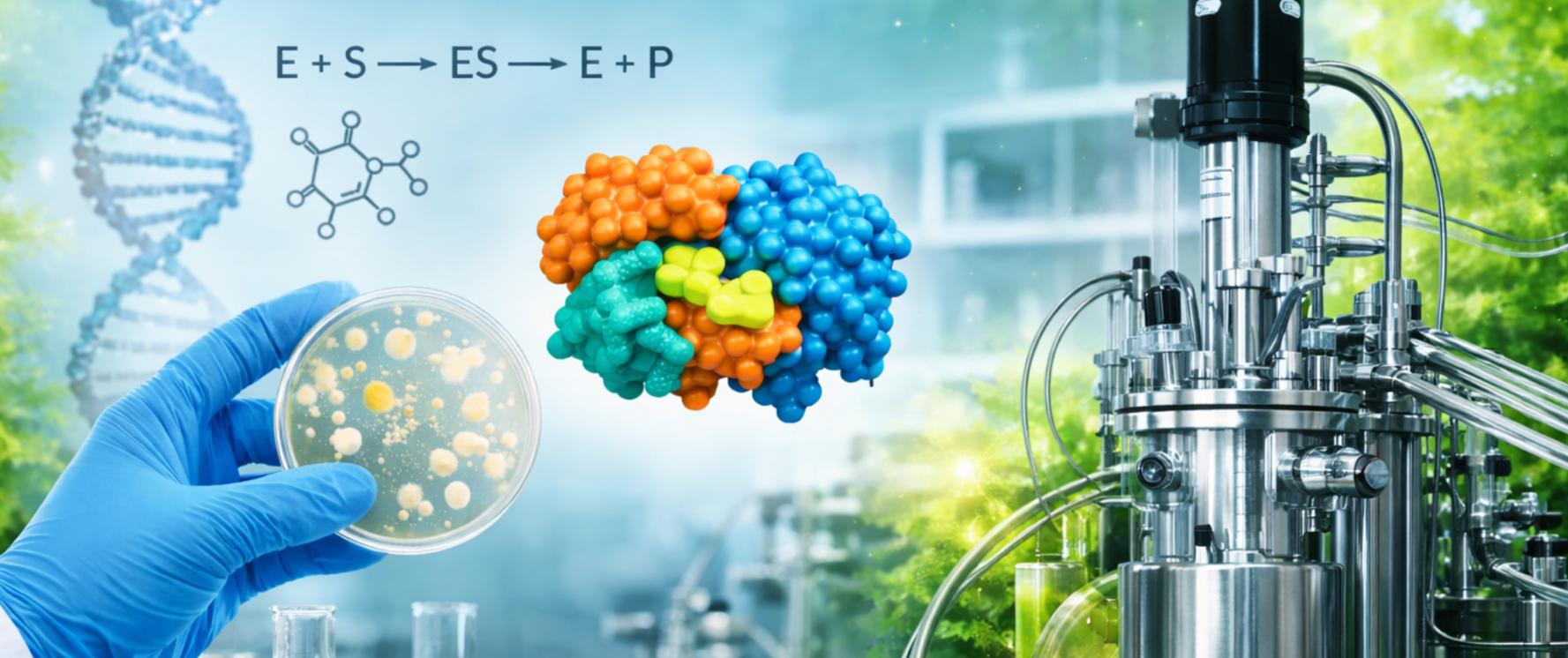
Enzymes are highly specialized biological catalysts—protein molecules that accelerate chemical reactions with remarkable accuracy and efficiency. While enzymes naturally operate within every living cell, advances in Microbiology and Biotechnology have enabled scientists to harness these molecules for large-scale industrial applications.
As we move through 2025, the global shift toward Green Chemistry and sustainable manufacturing has positioned enzyme production as a strategic priority across industries. Unlike traditional chemical catalysts that require extreme temperatures, toxic solvents, or high energy inputs, enzymes function under mild, eco-friendly conditions. From plastic waste degradation and wastewater treatment to food processing and pharmaceutical manufacturing, enzyme technology now lies at the core of the world’s transition to a cleaner, more sustainable industrial ecosystem.
What Is Enzyme Production in Biotechnology and Microbiology?
Enzyme production involves the large-scale synthesis of enzymes using living organisms, primarily microorganisms such as bacteria, fungi, and yeast.
- Microbiology supplies the biological “workforce”—efficient microbial strains such as Bacillus and Aspergillus.
- Biotechnology provides advanced tools like genetic engineering, CRISPR-Cas systems, and metabolic pathway optimization, enabling microbes to produce enzymes in higher yields, greater stability, and enhanced functionality.
The production workflow is broadly divided into:
- Upstream Processing: Selection, optimization, and cultivation of high-performing microbial strains.
- Downstream Processing: Extraction, purification, formulation, and quality validation of enzymes for commercial use.
Why Choose Enzyme Biotechnology as a Career in 2025 and Beyond?
1. Global Sustainability Mandates
International frameworks such as ESG compliance and the European Green Deal are compelling industries to replace polluting chemical catalysts with environmentally safe enzymatic alternatives.
2. AI-Driven Enzyme Design
Artificial intelligence and machine learning are enabling the creation of synthetic and engineered enzymes that do not exist in nature, dramatically expanding the limits of industrial chemistry.
3. Superior Process Efficiency
Enzyme-based processes often achieve near-complete reaction efficiency, require less energy, and generate minimal waste—making them both environmentally and economically superior.
Career Opportunities in Enzyme Production and Biotechnology
- Bioprocess Engineer: Designs and manages industrial bioreactors and fermentation systems.
- Enzyme Engineer / Protein Designer: Uses computational biology, AI tools, and CRISPR to develop high-performance enzymes.
- Quality Control (QC) Microbiologist: Ensures enzyme purity, safety, and regulatory compliance.
- Upstream / Downstream Scientist: Specializes in microbial cultivation or protein purification technologies.
- Technical Sales Specialist: Bridges scientific expertise with industrial customer requirements.
- Regulatory Affairs Specialist: Handles approval processes for enzymes used in food, pharma, and diagnostics.
- Bioinformatician: Identifies novel enzyme-coding genes through genomic and metagenomic analysis.
Salary Outlook
India
- Entry-level professionals: ₹4–7 LPA
- Mid-career (5–8 years): ₹15–25 LPA
- Senior leadership roles: ₹40 LPA and above
Global (USA / Europe)
- Entry-level roles: $65,000–$85,000 per year
- Senior scientists and directors: $150,000+ per year
Future Scope and Industry Growth
The global enzyme market is projected to grow at a ~7% CAGR, reaching nearly USD 25 billion by 2033.
High-Growth Segments
- Specialty Enzymes: DNA polymerases for diagnostics and RNA-based therapies
- Environmental Biotechnology: Enzymes for PET plastic degradation and wastewater treatment
- Personalized Medicine: Targeted drug delivery and gene-editing enzymes
Leading Enzyme Companies in India
- Advanced Enzyme Technologies – Largest Indian enzyme exporter with presence in 45+ countries
- Biocon – Uses enzymes in biosimilars and life-saving therapeutics
- Zytex Biotech – Leaders in sustainable textiles and fermentation
- Infinita Biotech – Specializes in wastewater and biofuel enzymes
- Aumgene Biosciences – Large-scale fermentation and contract production
- Lumis Biotech – Enzymes for animal nutrition and human health
Global Leaders in Enzyme Biotechnology
- Novozymes (Novonesis) – Global gold standard in bio-solutions
- BASF – Integrating chemical and biotechnological catalysis
- DuPont (IFF) – Pioneers in food and clean-label enzymes
- DSM-Firmenich – Enzymes for health, nutrition, and fragrance
- Chr. Hansen – Leaders in dairy and fermented food enzymes
- Codexis – Known for directed evolution in pharmaceutical enzymes
Who Should Choose This Field?
This discipline is ideal for individuals who:
- Have strong foundations in molecular biology and biochemistry
- Enjoy analytical problem-solving and experimental design
- Seek careers combining laboratory research and industrial application
- Are motivated by environmental sustainability and green innovation
Frequently Asked Questions (FAQs)
Q1. Which microorganisms are most commonly used?
Bacteria like Bacillus subtilis and fungi such as Aspergillus oryzae due to rapid growth and genetic flexibility.
Q2. Is a PhD mandatory?
No. MSc/MTech degrees are sufficient for production, QC, and process roles. PhDs are preferred for advanced R&D and protein design.
Q3. Submerged vs Solid-State Fermentation?
Submerged fermentation is liquid-based and automation-friendly, while solid-state fermentation is cost-effective for specific fungal enzymes.
Q4. How is AI transforming enzyme production?
Tools like AlphaFold and Rosetta enable structure prediction and in-silico enzyme design before laboratory validation.
Q5. Are food enzymes safe?
Yes. Most are classified as GRAS and regulated by authorities such as the FDA and EFSA.
Conclusion
Enzyme production represents a transformative shift in modern manufacturing. By 2025, the integration of Microbiology, Biotechnology, AI-driven protein design, and CRISPR technologies has elevated enzymes from biological curiosities to high-performance engines of a circular economy.
As industries replace energy-intensive chemical processes with precise microbial catalysts, economic growth is finally being decoupled from environmental degradation. The era of designer enzymes—capable of addressing plastic pollution, clean energy production, and advanced healthcare—is now a reality.
For students and professionals, this field offers more than stable career prospects; it offers the opportunity to actively shape the Green Industrial Revolution.
Author: Dr. Ashok A. Shinde
Associate Professor,
Institute of Biosciences and Technology,
MGM University,
Chhatrapati Sambhajinagar (MS), India
[email protected]