Why VFX & Animation Without a Filmmaking Foundation Is Obsolete in the AI Era
Beyond the Screen: Why VFX & Animation Without Film Foundation is Dead in the Era of AI
Industry Insights • Academic Analysis • Forward-Thinking Strategy
The global entertainment industry is currently undergoing its most seismic disruption since the transition from silent film to talkies. We have officially entered the era of hyper-realistic generative AI. Tools like OpenAI’s Sora, Midjourney, and Runway are no longer experimental novelties; they are sophisticated engines capable of generating breathtaking imagery, complex simulations, and entire cinematic sequences from a simple text prompt.
For years, commercial animation institutes sold a comfortable lie: Master this software, learn these keyboard shortcuts, and you’re guaranteed a lifelong career in VFX.
Today, that lie has been completely exposed. The era of the mere "button-pusher" or "software operator" is officially dead.
If your education in VFX and animation consists entirely of navigating a user interface, you are actively training for a job that a machine will do for a fraction of the cost and in a fraction of the time. To survive and thrive in this brave new world, digital artists must undergo a radical paradigm shift. The only armor against automation is a profound, unshakeable foundation in the classical grammar of filmmaking.
1. The Reality Check: VFX & Animation in the Age of AI
Let’s be brutally honest about what generative AI does: it automates technical execution. Asset generation, basic compositing, rotoscoping, and texture rendering—tasks that used to take junior artists weeks of tedious labor—can now be generated in seconds.
If your value proposition as an artist is merely technical execution, you are competing against an exponential curve.
| Focus Dimension | [Traditional Pixel-Pusher] | [Modern Creative Director] |
| Core Metric | Focuses on: Software, Shortcuts, Rendering | Focuses on: Story, Pacing, Composition |
| AI Vulnerability | High Vulnerability / Easily Automated | Empowered by AI / Irreplaceable Core |
| “AI can generate images, but it cannot tell a cohesive, emotionally resonant cinematic story. Only a filmmaker can.” |
An AI does not understand the psychological weight of a low-angle shot, nor does it comprehend how a subtle shift from warm to cool lighting can signal a character’s internal betrayal. It doesn't understand the invisible threads of a narrative arc or the delicate rhythmic pacing required to make an audience weep or gasp.
When you anchor your VFX and animation training in a deep foundation of filmmaking grammar, you stop being a technician and start being a director of digital imagery. You learn:
· Narrative Psychology: Why a visual effect must serve the character’s emotional truth, not just look cool.
· Cinematic Composition: Using guiding lines, negative space, and framing to direct the audience's subconscious attention.
· Lighting & Color Theory: Understanding how light behaves physically and emotionally to evoke mood and depth.
In the age of AI, the software tool becomes a commodity. Your cinematic mind is your only true intellectual property.
2. The Collaborative Ecosystem: Why Stand-Alone Isolation Fails
One of the greatest tragedies of modern digital arts education is the siloed artist. Aspiring animators and VFX artists are routinely tucked away in isolated computer labs, staring at monitors, completely detached from the chaotic, magical world of live-action production.
Learning VFX and animation inside a creative vacuum is a career dead-end. Film is, and always will be, a collaborative art form.
The Modern Reality: The modern VFX artist is no longer just a post-production technician hired to "fix it in post." They are a crucial co-storyteller who must operate actively on set and in pre-production.
Without a collaborative film school environment, you miss out on critical industry cross-pollination:
· Working with Directors: You must learn how to translate a director’s abstract, emotional vision into concrete digital assets. If a director says, 'Make this scene feel more suffocating,' you need the film vocabulary to translate that into focal length adjustments and atmosphere density.
· Partnering with Cinematographers: A brilliant digital asset looks utterly fake if it doesn't match the real-world camera lens distortion, sensor noise, lighting patterns, and physical camera movement. You must speak the language of f-stops, shutter angles, and lighting ratios.
· Respecting Editors & Sound Designers: Visual effects do not exist in a vacuum; they exist across cuts and frames. Understanding editing rhythm and how sound design/music scores drive visual pacing ensures your animations breathe and hit with maximum impact.
When you sit side-by-side with these creators during development, you become an indispensable asset to the production pipeline.
3. Production Facility Infrastructure vs. Software Tool-Kits
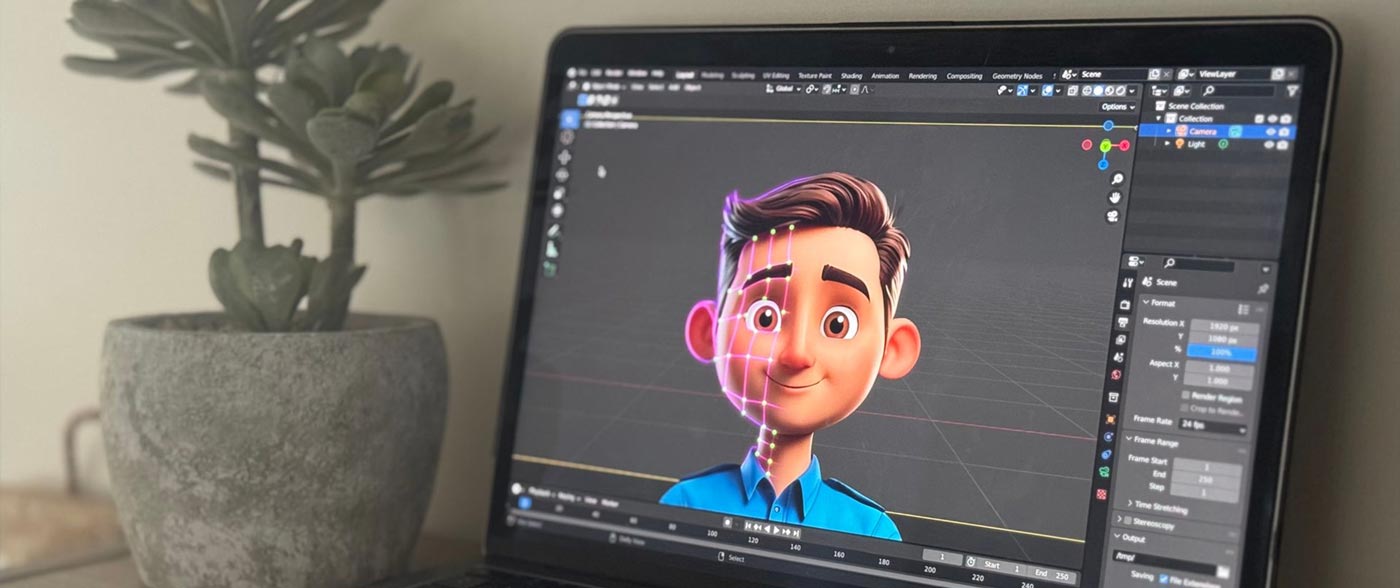
Go to almost any neighborhood "animation institute," and you will find the exact same setup: a cramped room packed with computers running cracked or basic licensed software. They promise to teach you Maya, Blender, or Unreal Engine.
But a computer lab is not a film studio, and it cannot provide a true cinematic education.
Software is just a digital pencil. Learning to use a pencil doesn't make you a master illustrator. To understand how digital elements integrate seamlessly with reality, you need an enterprise-grade production facility infrastructure. You cannot simulate the physics of light, space, and motion entirely inside a software viewport.
The Essential Hardware Ecosystem
· Dedicated Shooting Floor Stage & Chroma Studio: To learn green/blue screen physics, matte painting integration, camera tracking, and how real-world studio lights bounce off physical actors and interact with digital backdrops.
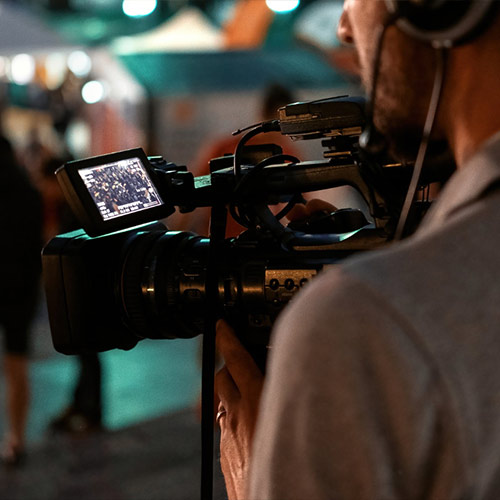
· Professional Cine Lenses & Super 35mm/Large Format Cameras: To understand the tactile realities of depth of field, optical aberrations, and sensor data capturing—essential knowledge for any VFX compositor.
· DI (Digital Intermediate) Color Grading Lab: To master color spaces (like ACES), look-up tables (LUTs), and high-dynamic-range (HDR) pipelines, ensuring your digital renders match the final theatrical output perfectly.
· Professional Sound Studio: To experience firsthand how auditory world-building influences visual timing and animation keyframing.
4. The Ideal Launchpad: MGM University’s School of Film Arts (SoFA)
If you want to be a pioneer in this new landscape rather than a casualty of automation, you need an educational ecosystem designed for the future. Look no further than MGM University’s School of Film Arts (SoFA) in Chhatrapati Sambhajinagar.
SoFA isn't just an educational institution; it is a sprawling, state-of-the-art studio ecosystem where the line between student and industry professional is completely blurred.
Premier Degree Tracks Built for the Future
· B.Des. Filmmaking (with VFX and Animation) – A foundational, deeply immersive undergraduate track.
· M.Des. Filmmaking (with VFX and Animation) – An advanced postgraduate track for artists looking to master creative direction and leadership in the digital era.
The SoFA Advantage: Infrastructure & "Learning by Doing"
What sets SoFA miles apart from traditional institutes is its commitment to a practice-led, hands-on progressive learning model. You don't just sit through lectures; you make cinema.
• World-Class Infrastructure: Students have unfettered access to a colossal production infrastructure, including an expansive Chroma Floor Studio, cutting-edge VFX & Animation Labs, an industry-standard DI Lab, a massive Shooting Floor, and the iconic Chitrapati Dr. V. Shantaram Theatre to screen work on the big screen, exactly how it was meant to be seen.
• The Ultimate Collaborative Metric: At SoFA, you are instantly integrated into a bustling movie studio environment. Students collectively collaborate across disciplines to produce dozens of short films and a full-length feature film every single year.
By the time you graduate, you don't just leave with a certificate; you leave with real IMDb credits, a world-class professional showreel, and a battle-tested understanding of how a real film set operates. You emerge as an industry-ready creative leader.
Conclusion: Step Out of the Lab and Onto the Set
The writing is on the wall. AI is coming for the technicians, the button-pushers, and the isolated software operators. But it can never replace the Creative Practitioner—the artist who knows how to wield technology as an extension of their cinematic soul.
If you want to build a career that is resilient to the tides of AI automation, you must stop looking at VFX as a computer science project and start looking at it as an art form. Stop settling for basic computer training centers that only teach you which keys to press.
Invest in an education that teaches you how to think, create, collaborate, and direct. Your future is waiting on the shooting floor, not just behind a desk.
SECURE YOUR FUTURE IN CINEMA Don't let your skills become obsolete before your career even begins. Apply Now for the B.Des or M.Des Programs at MGM University’s School of Film Arts and transform from a software operator into a visionary filmmaker. |
Author: Dr. Shivdarshan Kadam
Head of Department,
School of Film Arts,
MGM University