B.Tech. Electronics and Computer Engineering
 By Jawaharlal Nehru Engineering College.
- Program: Undergraduate (UG)
- Duration: 4 Year(s)
- Intake: 60
Program Outline
In the last three decades, drastic changes have taken place in the field of Electronics and Computer Engineering. These changes have revolutionized the life of masses.
Electronics Technology has entered all the walks of life. This technology finds its applications in Consumer, Industrial, Civil, Military, Medical and in many more fields. Today, in many fields, we can’t imagine Automation without the use of Electronics.
The Department of Electronics and Telecommunications Engineering has designed a unique program of B.Tech. (Electronics and Computer Engineering) approved by the All India Council for Technical Education (AICTE), New Delhi. This program not only develops the industry-needed expertise in the chosen domain but also helps to acquire a professional attitude, effective communication skills, leadership qualities, management skills and an ability to use engineering expertise for solving social issues using Gandhian philosophy.
Fees Structure
| Particulars | Amount | Remarks |
|---|---|---|
| Tuition Fees | ₹175000/- | Yearly |
| Application Form & MGMU-CET | ₹2000/- | One Time |
| Examination Fees | ₹5000/- | Yearly |
| Student Activity | ₹2000/- | Yearly |
| UMIS & Student Insurance | ₹3000/- | One Time |
| Caution Money Deposit | ₹5000/- | Refundable |
| Eligibility Fees | ₹5000/- | One Time |
| Alumni Association Membership fees | ₹2000/- | One Time |
Program Outcomes
Interdisciplinary Knowledge
Acquire a solid foundation in electronics and computer engineering principles, along with the necessary skills in mathematics, science, and basic engineering.
Problem-Solving Skills
Identify, formulate, and solve complex engineering problems by applying principles of electronics and computer engineering.
Design and Innovation
Design solutions for electronics and computer systems that meet specific needs with consideration for public health and safety, cultural, societal, and environmental concerns.
Research and Analysis
Conduct research-based analysis and interpret data to provide valid conclusions in the field of electronics and computer engineering.
Modern Tool Usage
Utilize modern engineering and computational tools, including prediction and modeling, to analyze complex electronics and computer engineering problems.
Ethical Responsibility
Understand and commit to professional ethics, responsibilities, and norms in electronics and computer engineering practice.
Impact of Engineering Solutions
Evaluate the impact of professional engineering solutions in societal and environmental contexts, emphasizing sustainable development.
Effective Communication
Communicate effectively with a range of audiences on complex engineering activities in the electronics and computer engineering fields.
Teamwork and Leadership
Function effectively as an individual, and as a member or leader in diverse teams in multidisciplinary settings.
Life-long Learning
Recognize the importance of, and pursue lifelong learning in the broader context of innovation and technological developments.
Project Management
Demonstrate understanding and application of engineering and management principles to manage projects in multidisciplinary environments.
Technological Integration
Integrate electronics and computer engineering techniques for the development of innovative products and solutions.
Eligibility
(a) Maharashtra State Candidate:
(i) The Candidate should be an Indian National and having domicile of Maharashtra state and / or born in Maharashtra state.
(ii) Passed HSC or its equivalent examination with Physics and Mathematics as compulsory subjects along with one of the Chemistry or Biotechnology or Biology or Technical Vocational subject or Computer Science or Information Technology or Informatics Practices or Agriculture or Engineering Graphics or Business Studies , and obtained at least 45% marks (at least 40% marks, in case of Backward class categories and Persons with Disability candidates belonging to Maharashtra State only) in the above subjects taken together and the candidate should have appeared in MGMU - CET 2026/ MHT-CET 2026 / PERA CET 2026 and should obtain non zero score in MGMU - CET 2026/ MHT-CET 2026 / PERA CET 2026. However, preference shall be given to the candidate obtaining non-zero positive score in MGMU - CET 2026 over the candidates who obtained non-zero score in MHT-CET 2026/ PERA CET 2026.
OR
(iii) Passed Diploma in Engineering and Technology and obtained at least 45% marks (at least 40% marks, in case of Backward class categories and Persons with Disability candidates belonging to Maharashtra State only).
(b) All India Candidates:
(i) The Candidate should be an Indian National.
(ii) Passed HSC or its equivalent examination with Physics and Mathematics as compulsory subjects along with one of the Chemistry or Biotechnology or Biology or Technical Vocational subject or Computer Science or Information Technology or Informatics Practices
or Agriculture or Engineering Graphics or Business Studies , and obtained at least 45% marks (at least 40% marks, in case of Backward class categories and Persons with Disability candidates belonging to Maharashtra State only) in the above subjects taken together and candidate should have appeared in MGMU - CET 2026/ JEE Mains Paper-I 2026/ MHT-CET 2026/ PERA CET 2026 and should obtain non-zero score in MGMU - CET 2026/ JEE Mains Paper-I 2026/ MHT-CET 2026/ PERA CET 2026. However, preference shall be given to the candidate obtaining non-zero positive score in JEE Mains Paper-I 2026 over the candidates who obtained non-zero score in MGMU - CET 2026/ MHT-CET 2026/ PERA CET 2026.
OR
(iii) Passed Diploma in Engineering and Technology and obtained at least 45% marks (at least 40% marks, in case of Backward class categories and Persons with Disability candidates belonging to Maharashtra State only)
(c) NRI Candidates:
(i) The candidate should have passed the HSC or its equivalent examination with Physics and Mathematics as compulsory subjects along with one of the Chemistry or Biotechnology or Biology or Technical Vocational subject or Computer Science or Information Technology or Informatics Practices or Agriculture or Engineering Graphics or Business Studies, and obtained at least 45% marks in the above subjects taken together.
Career Prospects
Software/IT Analyst
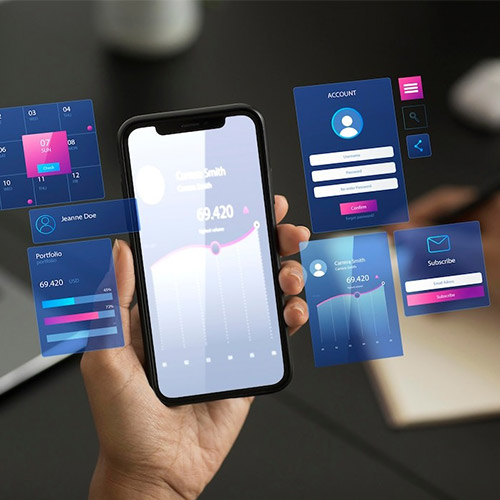
Android Application Developer

Solutions Architect – Cloud Computing
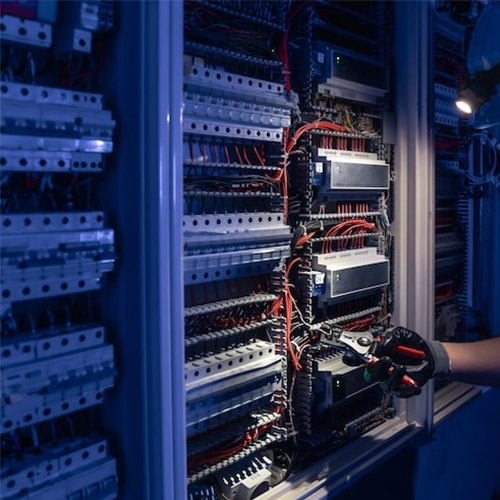
Telecom Network Design Engineer
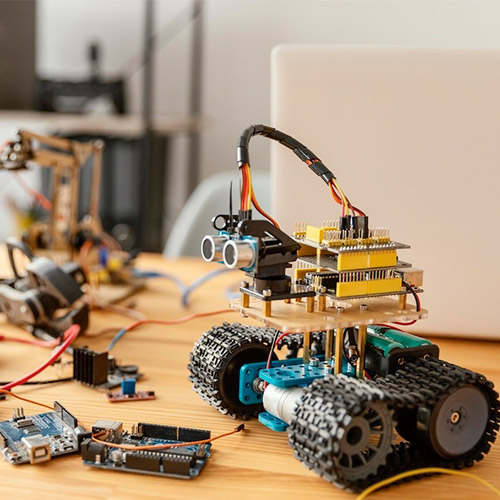
Robotics Application Engineer
Admission Procedure
Step
1
Register on admissions.mgmu.ac.in
Step
2
Fill Application Form
Step
3
Receive entrance test link for MGMU CET (Date will reflect on Student Dashboard / Website)
Step
4
Appear for MGMU CET
Step
5
Check Merit List on Dashboard
Step
6
Verification and Submission of Documents
Step
7
Fees Payment
Step
8
Welcome to MGMU
Teaching Faculty
| Faculty Name | Designation |
|---|---|
| Dr. Sunil N Pawar | Professor and HOD |
| Mr. Faisal I Shaikh | Associate Professor |
| Dr. Vandana B Malode | Associate Professor |
| Ms. Vishwashri A Kulkarni | Associate Professor |
| Mr. Suresh A Annadate | Associate Professor |
| Dr. Vijayshree A More | Associate Professor |
| Dr. Girish R Basole | Assistant Professor |
| Mr. Aruna P Phatale | Associate Professor |
| Dr. Aarti R Salunke | Assistant Professor |
| Dr. Chhaya S Khandelwal | Associate Professor |
| Mr. Sumedh D. Jadhav | Assistant Professor |
| Ms. Mrudula A Mulay | Assistant Professor |
| Dr. Sushama D. Gavarskar | Assistant Professor |
| Mr. Manesh K Pawar | Assistant Professor |
| Ms. Prajakta B Murmude | Assistant Professor |
| Mr. Aniket G Patil | Assistant Professor |
| Mr. Pratibha P Patil | Assistant Professor |
| Mr. Vishal J Lipne | Assistant Professor |
| Mr. Rohit Limbraj Mudbe | Assistant Professor |
Department Infrastructure
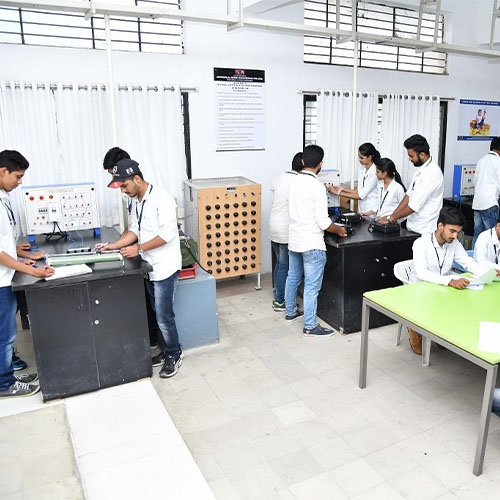
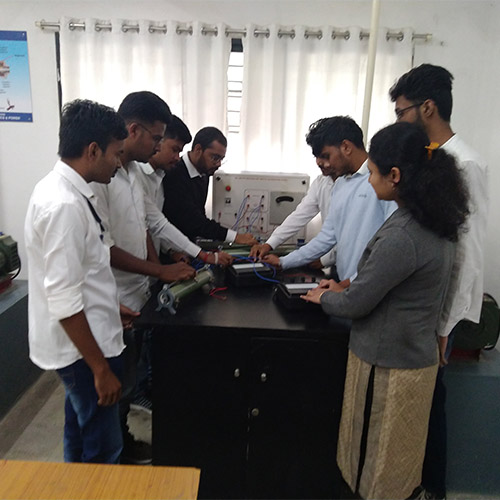
A.C. Machine Lab
This lab facilitates experiments on AC electrical machines like Slip-Ring and Squirrel Cage Induction motors, along with Alternator setups. Students can conduct tests to measure efficiency, torque, speed, and losses.
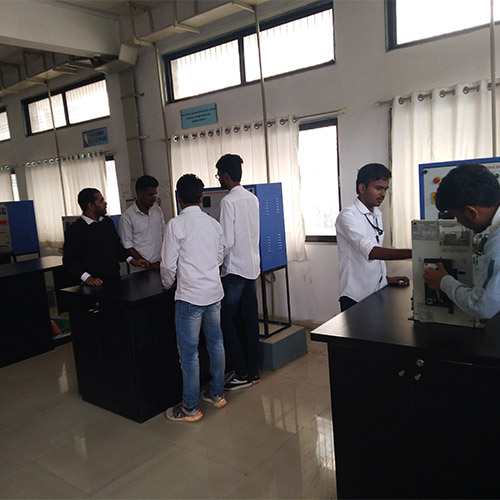
D.C. Machines & Drives Lab
This lab focuses on DC machines, generators, and drives, featuring Series and Shunt motors alongside DC generators. Students can conduct tests on these machines and perform speed-torque experiments with various DC drives to enhance their understanding of motor control.
Switch Gear & Protection Lab
The lab conducts protection experiments for alternators, transformers, and transmission lines, using specific panels for fault simulation and relay operation. It also includes demonstrations on air circuit breakers and computation of transmission line parameters.
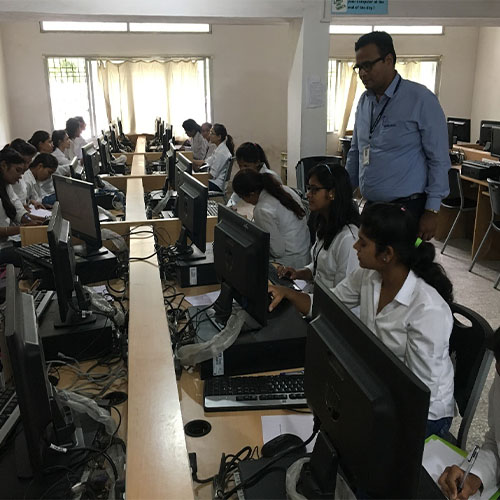
Computer Lab – I
The computer lab, equipped with 38 latest computers and high-speed internet, facilitates virtual learning and data research for all departmental students. Preinstalled software, including Scilab, Ecad, Inventor, ETAP, and PSCAD, supports simulation and practical work in courses like Network Analysis, Numerical Methods, Programming, and Project Design.
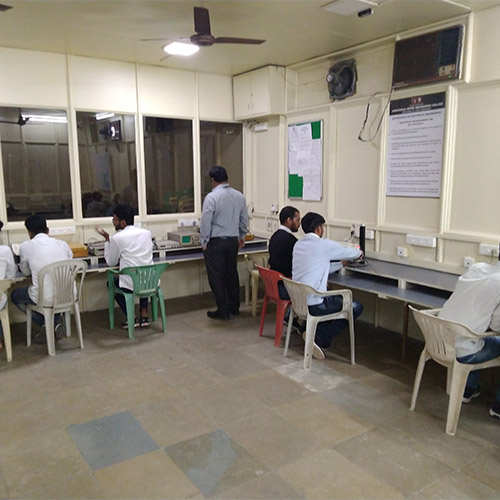
Electrical Measurement Lab
The lab is dedicated to Electric Measurement and Instrumentation practicals for Electrical Engineering students. It features instruments like AC bridges, DC bridges, Weight measurement tools, Linear Variable Differential Transformer, and RTD measurement Potentiometer, allowing students to gain practical insights into measurement techniques.
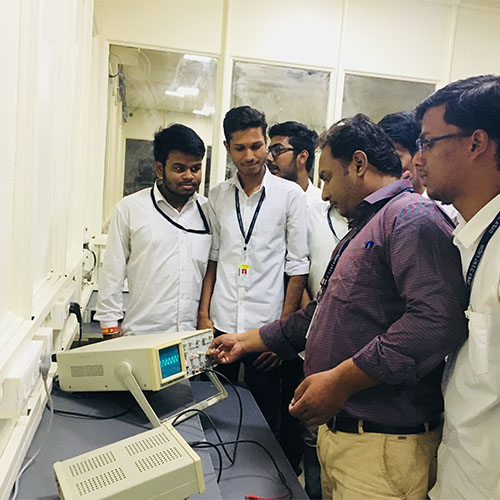
Analog & Digital Circuit Lab
The lab serves foundation courses in basic electronics engineering, electronic devices and circuits, linear integrated circuits, and filter design. It features Analog & Digital Trainer kits, Digital storage oscilloscope, Op-amp Trainer kits, Dual power DC supply, and Digital ICs for hands-on practice in various analog and digital circuits.
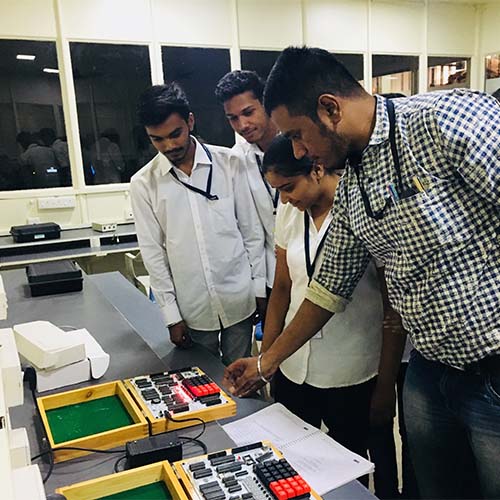
Microprocessor Lab
These labs support practical courses in digital systems, microprocessors, microcontrollers, programming, and projects. They are equipped with digital electronics trainers, function and signal generators, CROs, DSOs, and Trainer kits for Microprocessor 8085 and Microcontroller 8051 studies. Additionally, computers with simulation software aid in testing microcontroller 8051 interfacing circuits.
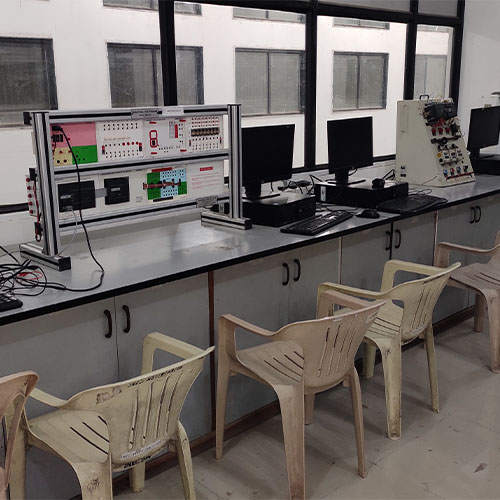
Industrial Automation Lab
The lab is equipped with essential automation tools, including Allen Bradley, Siemens, and LG PLC trainer kits. Students engage in practical exercises, writing PLC ladder programs for various sequential tasks, troubleshooting, and executing them in real-time sessions.
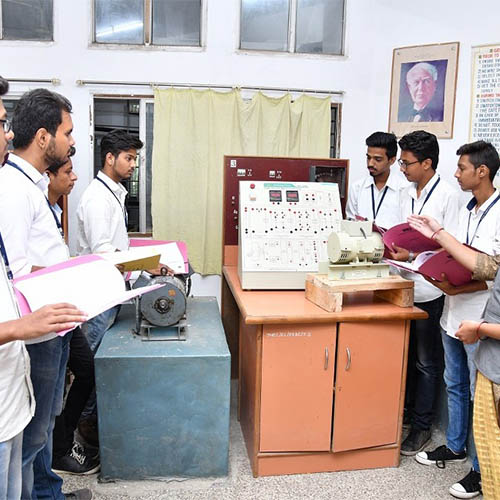
Power Electronics and Drives Lab
The lab focuses on power electronics with setups for AC to DC, DC to DC, DC to AC, and AC to AC conversions. It features boards/kits and equipment like Power Oscilloscopes and DSOs, along with demonstrable motor-generator drives for practical experiments.
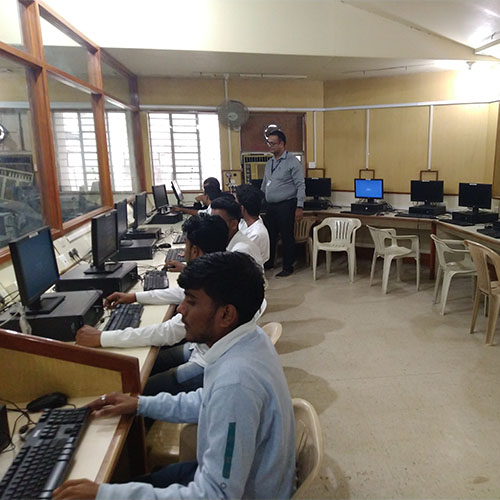
Computer Lab – II
The additional computer lab, featuring the latest computers and high-speed internet, facilitates virtual learning and research for all departmental students. It supports practical virtual labs and simulations for various courses, providing a resourceful environment for hands-on experiences.
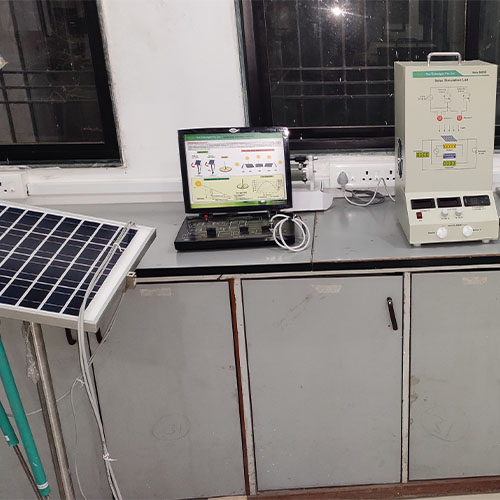
Renewable Energy Sources Lab
The lab features cutting-edge Renewable Energy kits, including Solar Energy and Wind Energy kits. Students can simulate real-life renewable projects and experiment with VI characteristics, Solar tracking mechanisms, and wind energy conversion processes in detail.
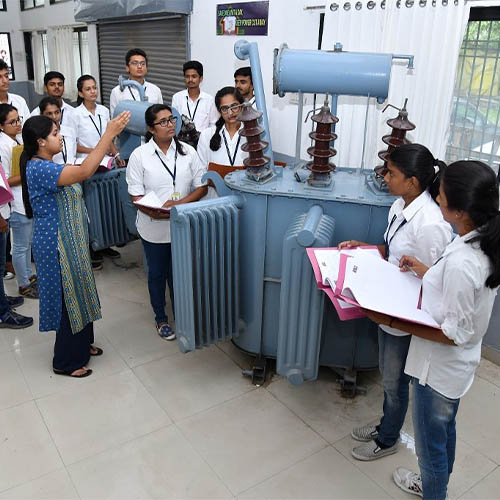
High Voltage Engineering Lab
The lab features high-voltage instruments for demonstration and experimentation. Power transformers aid in understanding their construction and operation, while AC & DC insulation testing kits facilitate testing of insulating materials for high-voltage applications. Horn gap apparatus enhances understanding of high-voltage protection systems.
Industry Collaboration