B.Tech. Chemical Engineering
 By Jawaharlal Nehru Engineering College.
- Program: Undergraduate (UG)
- Duration: 4 Year(s)
- Intake: 30
Program Outline
The Bachelor of Technology (B.Tech.) in Chemical Engineering degree program is approved by the All India Council for Technical Education (AICTE) and offers Choice Based Credit System education. In addition to core courses, student can opt for discipline specific elective subjects, open elective subjects from different institutes of the MGM University.
This program is uniquely designed to enhance the employability and to prepare students to work in a multidisciplinary work environment. To achieve this, program offers Major-Minor degree scheme wherein Major will be in core Chemical Engineering and Minor will be as per students interests. To provoke independent thoughts in students and importance of team work, program also gives emphasis on Outcome Based Education, design thinking process and cooperative education component involving Projects, Seminars, Internships and Activity Based Learning.
We aim and prepare students to be adaptable and industry-ready having proficiency across range of technical and non-technical subjects. Chemical Engineers have continuously contributed and still are contributing to improve standard of living of the society through many sustainable processes and products. Therefore, after completion of this program our students will be very well suited to serve in both industrial and service sector.
Fees Structure
| Particulars | Amount | Remarks |
|---|---|---|
| Tuition Fees | ₹175000/- | Yearly |
| Application Form & MGMU-CET | ₹2000/- | One Time |
| Examination Fees | ₹5000/- | Yearly |
| Student Activity | ₹2000/- | Yearly |
| UMIS & Student Insurance | ₹3000/- | One Time |
| Caution Money Deposit | ₹5000/- | Refundable |
| Eligibility Fees | ₹5000/- | One Time |
| Alumni Association Membership fees | ₹2000/- | One Time |
Program Outcomes
Chemical Process Design Proficiency
Graduates will demonstrate the ability to design and optimize chemical processes, considering efficiency, safety, and environmental impact.
Unit Operations Mastery
Acquire expertise in unit operations, enabling students to analyze and design processes involving fluid flow, heat transfer, mass transfer, and reaction engineering.
Material Science Understanding
Develop a strong understanding of materials used in chemical engineering processes, including their properties, behavior, and selection criteria.
Environmental and Safety Awareness
Graduates will be well-versed in environmental and safety considerations, ensuring responsible and sustainable engineering practices.
Process Control and Optimization
Gain proficiency in process control techniques and optimization strategies to enhance the efficiency and reliability of chemical processes.
Chemical Engineering Laboratory Skills
Develop hands-on skills in operating and optimizing chemical engineering equipment, fostering practical knowledge applicable in industrial settings.
Effective Communication in Engineering
Cultivate effective communication skills, enabling graduates to convey complex engineering concepts and collaborate with diverse teams.
Ethical and Professional Conduct
Instill a commitment to ethical standards and professional conduct, emphasizing the importance of integrity in the practice of chemical engineering.
Eligibility
(a) Maharashtra State Candidate:
(i) The Candidate should be an Indian National and having domicile of Maharashtra state and / or born in Maharashtra state.
(ii) Passed HSC or its equivalent examination with Physics and Mathematics as compulsory subjects along with one of the Chemistry or Biotechnology or Biology or Technical Vocational subject or Computer Science or Information Technology or Informatics Practices or Agriculture or Engineering Graphics or Business Studies , and obtained at least 45% marks (at least 40% marks, in case of Backward class categories and Persons with Disability candidates belonging to Maharashtra State only) in the above subjects taken together and the candidate should have appeared in MGMU - CET 2026/ MHT-CET 2026 / PERA CET 2026 and should obtain non zero score in MGMU - CET 2026/ MHT-CET 2026 / PERA CET 2026. However, preference shall be given to the candidate obtaining non-zero positive score in MGMU - CET 2026 over the candidates who obtained non-zero score in MHT-CET 2026/ PERA CET 2026.
OR
(iii) Passed Diploma in Engineering and Technology and obtained at least 45% marks (at least 40% marks, in case of Backward class categories and Persons with Disability candidates belonging to Maharashtra State only).
(b) All India Candidates:
(i) The Candidate should be an Indian National.
(ii) Passed HSC or its equivalent examination with Physics and Mathematics as compulsory subjects along with one of the Chemistry or Biotechnology or Biology or Technical Vocational subject or Computer Science or Information Technology or Informatics Practices
or Agriculture or Engineering Graphics or Business Studies , and obtained at least 45% marks (at least 40% marks, in case of Backward class categories and Persons with Disability candidates belonging to Maharashtra State only) in the above subjects taken together and candidate should have appeared in MGMU - CET 2026/ JEE Mains Paper-I 2026/ MHT-CET 2026/ PERA CET 2026 and should obtain non-zero score in MGMU - CET 2026/ JEE Mains Paper-I 2026/ MHT-CET 2026/ PERA CET 2026. However, preference shall be given to the candidate obtaining non-zero positive score in JEE Mains Paper-I 2026 over the candidates who obtained non-zero score in MGMU - CET 2026/ MHT-CET 2026/ PERA CET 2026.
OR
(iii) Passed Diploma in Engineering and Technology and obtained at least 45% marks (at least 40% marks, in case of Backward class categories and Persons with Disability candidates belonging to Maharashtra State only)
(c) NRI Candidates:
(i) The candidate should have passed the HSC or its equivalent examination with Physics and Mathematics as compulsory subjects along with one of the Chemistry or Biotechnology or Biology or Technical Vocational subject or Computer Science or Information Technology or Informatics Practices or Agriculture or Engineering Graphics or Business Studies, and obtained at least 45% marks in the above subjects taken together.
Career Prospects
Chemical Process Engineer

Petroleum Engineer

Environmental Engineer
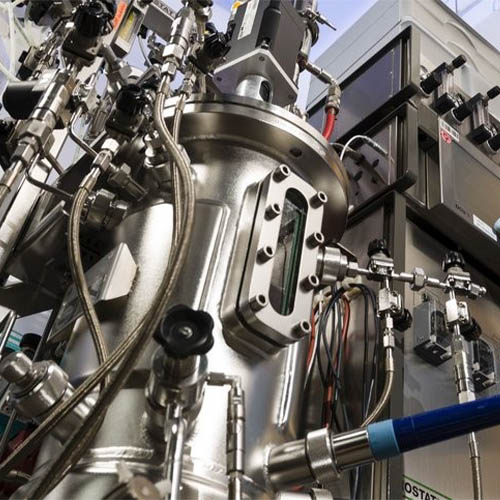
Bioprocess Engineer
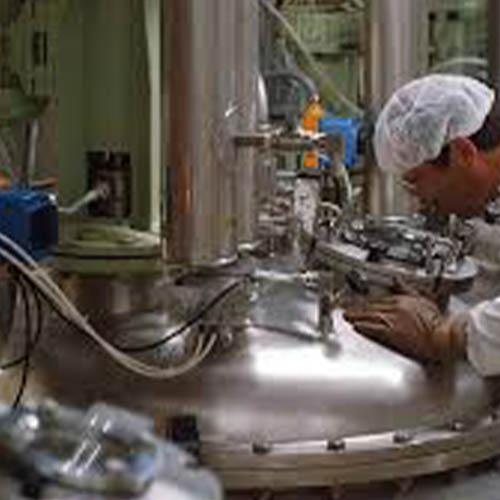
Quality Assurance Engineer (Chemical)
Admission Procedure
Step
1
Register on admissions.mgmu.ac.in
Step
2
Fill Application Form
Step
3
Receive entrance test link for MGMU CET (Date will reflect on Student Dashboard / Website)
Step
4
Appear for MGMU CET
Step
5
Check Merit List on Dashboard
Step
6
Verification and Submission of Documents
Step
7
Fees Payment
Step
8
Welcome to MGMU
Teaching Faculty
| Faculty Name | Designation |
|---|---|
| Dr. Sadanand Y. Guhe | Dr. Prof. and Head of Dept. |
| Mr. Munjaji U. Pople | Assistant Professor |
| Mr. Sudhir D. Yadav | Assistant Professor |
| Dr. Vishnu Gite | Assistant Professor |
| Dr. Ratna S Katiyar | Associate Professor |
Department Infrastructure
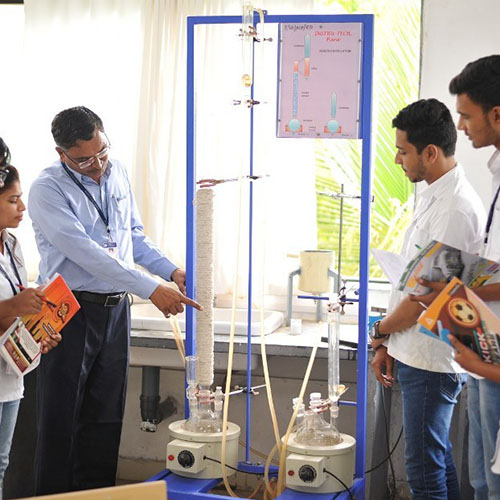
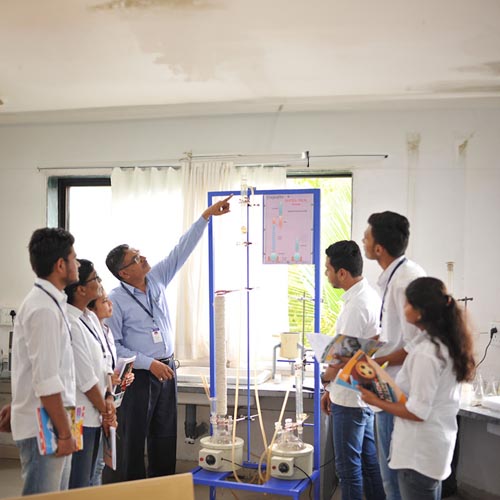
Mass Transfer Operations Lab
The Mass Transfer Operations Lab familiarizes students with common unit operation equipment in chemical industries for separating components. It provides hands-on training through experiments to help students apply theoretical fundamentals to practical situations, mirroring real plant operations.
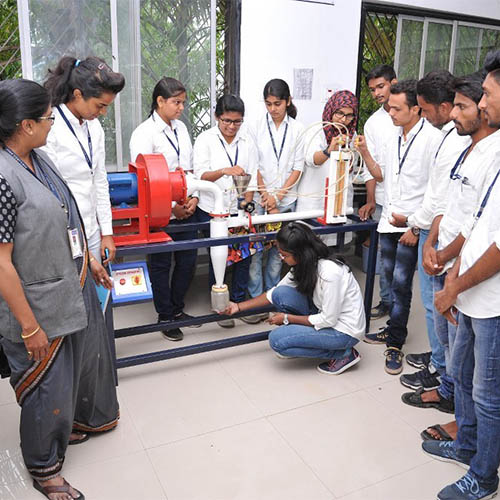
Advanced Separation Processes Lab
The lab provides hands-on experience with advanced separation processes in the industry. Students learn the significance of applying conventional separation techniques in reactive systems through experiments and simulations.
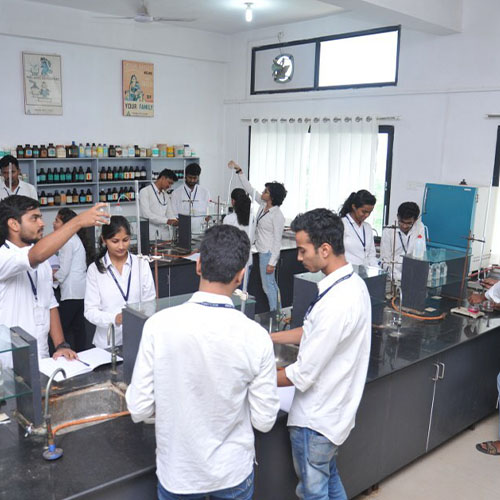
Chemistry Lab
Students learn techniques for assessing and controlling product quality in industry. The lab covers methods applicable throughout their studies, aiding in the analysis of compounds obtained in various experiments during the first and second years.
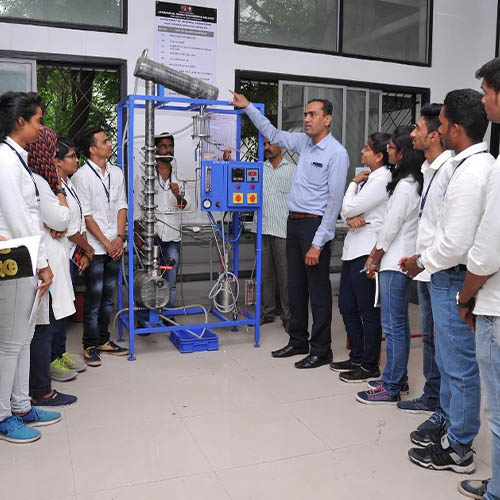
Chemical Reaction Engineering Lab
Chemical Reaction Engineering Lab provides hands-on experience in applying reaction engineering theories on lab-scale equipment. Students study phenomena on CSTR, CSTR in series, batch reactor, tubular/plug flow reactor, and explore reaction kinetics and reactor design using CHEMCAD software.
Industry Collaboration